


Overview
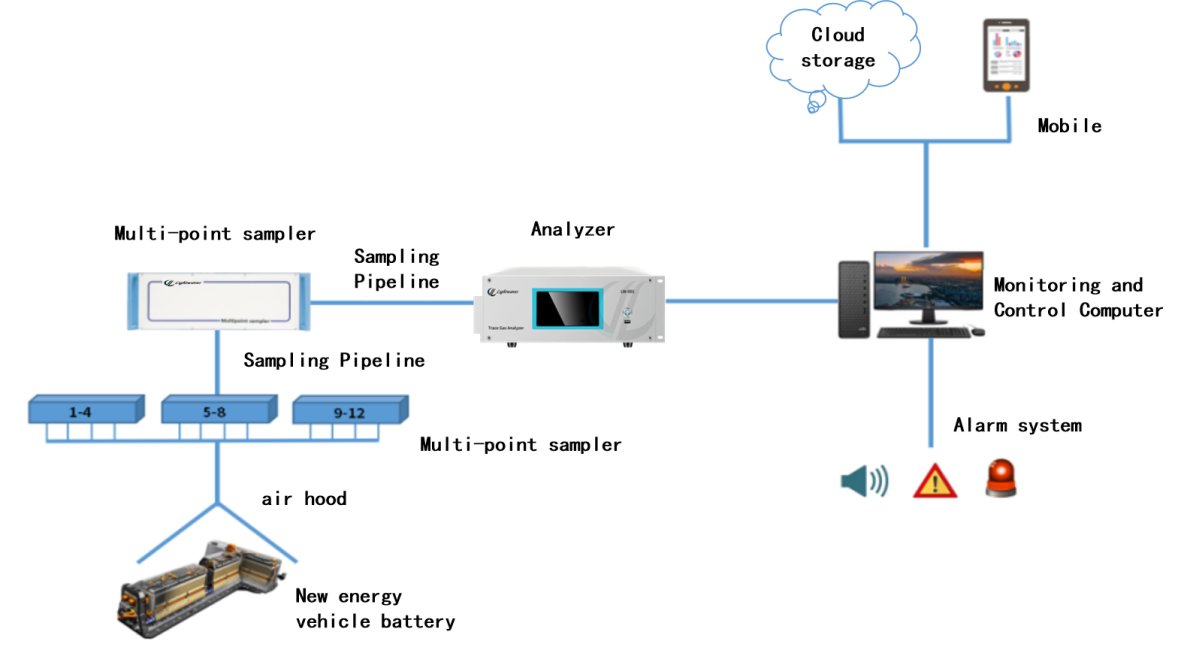
A real-time thermal runaway and spontaneous combustion monitoring system continuously measures key gases (such as CO, CO2, CH4, C2H2, C2H4, C2H6, C3+, HF, H2S, SO2, NOX, NH3, HCN, O2, N2, H2, HCl, VOCs), as well as temperature and pressure, to track gas generation patterns during the spontaneous ignition of materials including coal, batteries, cables, and waste. By analyzing characteristic marker gases, the system enables early prediction of ignition point temperature changes, assessment of material oxidation status, and provides a scientific basis for spontaneous combustion prevention and production safety.
Principle
Bundle tube monitoring system for spontaneous combustion fire consists of dust filter, single tube, bundle tube, shunt box, extraction pump, gas sampling control cabinet, monitoring computer cantilever microphone photoacoustic spectrum multi-gas analyzer, thermal conduct ivity multi-gas analyzer printing output equipment, network card, professional software, etc.
Features
l
Single-point and multi-point gas sampling with automatic polling
l Centralized control of up to 60 sampling points
l Mechanism-based spontaneous combustion and thermal runaway forecasting
l Explosion risk assessment using triangular analysis
l Ultra-low detection limits (ppb to sub-ppm)
l Fast analysis time of 2–3 minutes per point
l 24/7 unattended automatic operation
l Real-time gas analysis, data processing, and alarm output
l Comprehensive data storage, trend analysis, and reporting
l Network-enabled remote monitoring via web and mobile devices
l Modular system design for flexible deployment
l Customizable sampling configurations
l Maintenance-free operation with no carrier gas or consumables
l Compact, lightweight, and reliable industrial design
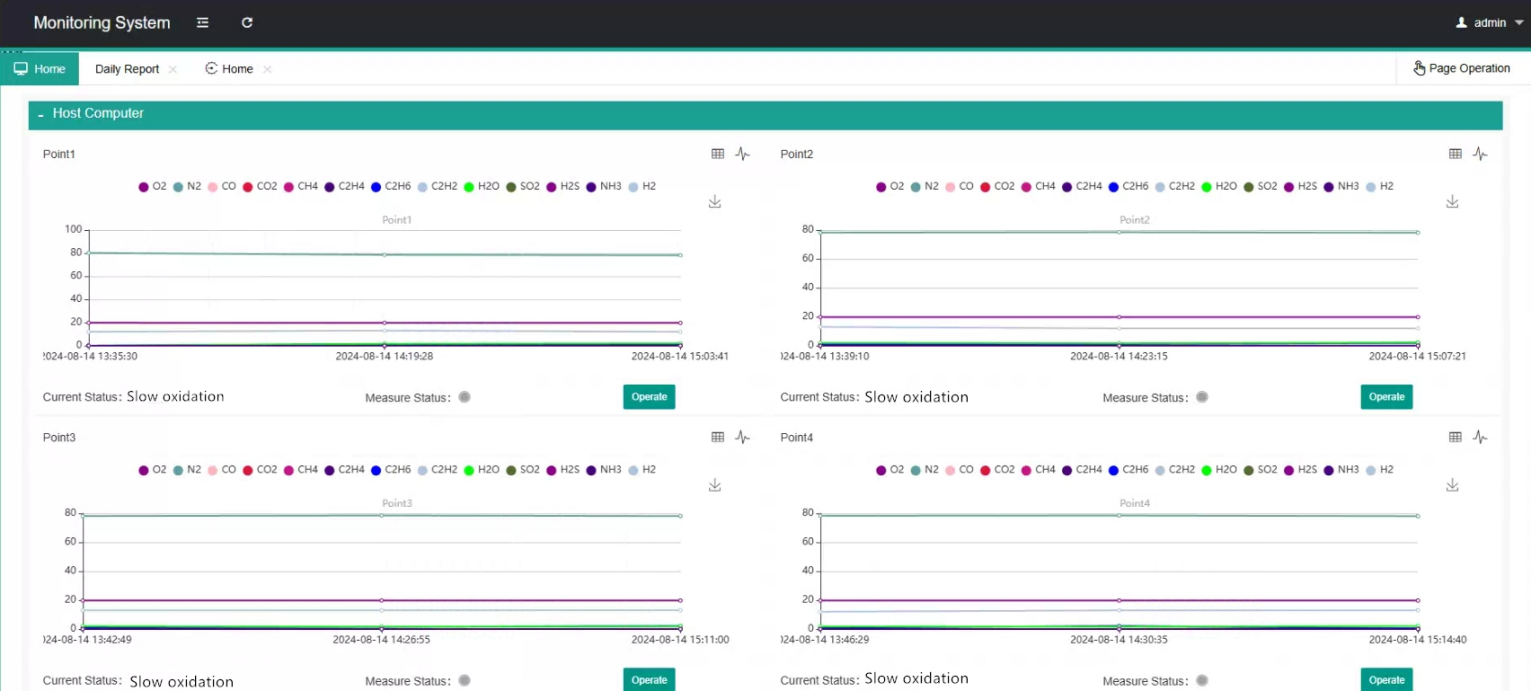
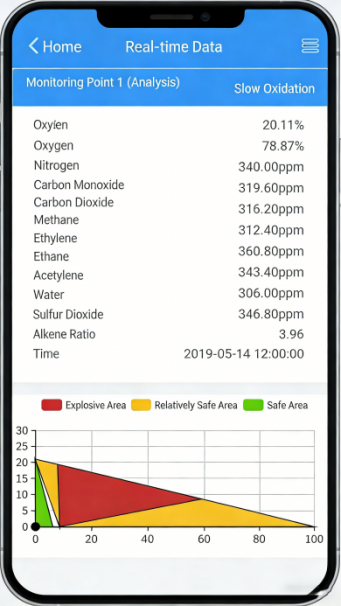
WEB Software Mobile Software
Types
l Ground Operation Mode
l Underground Operation Mode
l Portable Analyzer Main Unit
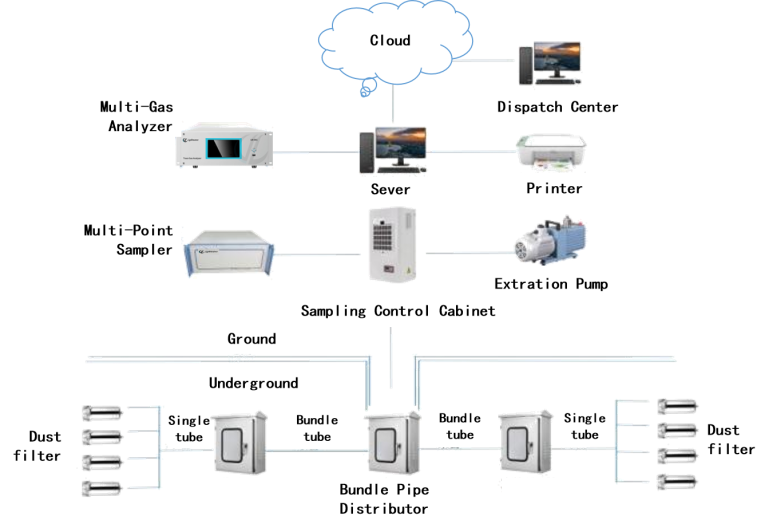
Ground Operation Mode
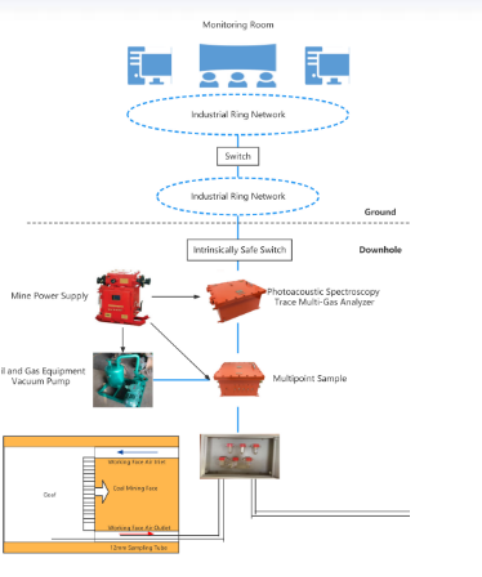
Underground Operation Mode
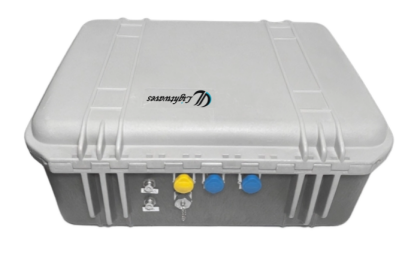
Portable Analyzer Main Unit
Technical Parameters
Photoacoustic Spectroscopy with Cantilever Optical Microphone (CO, CO2, CH4, C2H4, C2H6, C2H2, C3H6, C3H8, H2O, H2S, SO2, NOX, NH3), Thermal Conductivity (O2, N2), Palladium alloy (H2), Semiconductor (temperature, pressure) | |||
Sampling method:Grab sampling, with an extracted air length of no less than 10,000 meters | |||
Response time:Depending on the channel integration time (C.I.T.) and gas exchange cycle, typically 10 seconds to several minutes; single gas:<10 seconds; flushing time:nine gases (including water vapor) <120 seconds | |||
Measurement range and limit | |||
CO | 1ppm,0~1% | CO2 | 5ppm,0~5% |
CH4 | 0.1ppm,0~1% | C2H4 | 0.1ppm,0~1% |
C2H6 | 0.1ppm,0~1% | C2H2 | 0.1ppm,0~1% |
C3H8 | 0.1ppm,0~1% | NH3 | 0.1ppm,0~1% |
H2O | 1ppm,0~1% | SO2 | 0.1ppm,0~1% |
HCL | 0.2ppm,0~1% | HCN | 0.2ppm,0~1% |
H2S | 0.5ppm,0~1% | NOX | 0.1ppm,0~1% |
O2 | 0.1%,0~25% | N2 | 0.5%,0~80% |
Temperature | (-5-100)℃ | Pressure | 0~1000KPa |
Temperature:0.5℃ Pressure:0.1 KPa | |||
Accuracy:±2% of measured value | |||
Control bundle tube monitoring channels:12 channels, 24 channels, 48 channels, 64 channels | |||
Others | |||
l The system has dual redundant operation functionality; | |||
l The analyzer can operate in conjunction with or independently from the data acquisition workstation, preventing the system from shutting down if the data acquisition station fails | |||
l The system requires no carrier gas and no consumables,and comes factory-calibrated; | |||
l The system operates at 220VAC@50Hz, with a power consumption of less than 500W; | |||
l 5G network access to a smart big data network. | |||
Applications
Coal
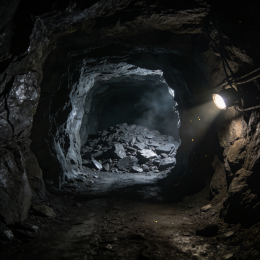
It can accurately monitor the exothermic oxidation process of coal in coal piles and achieve real-time early warning and prevention of spontaneous coal fires by detecting indicative.
Batteries
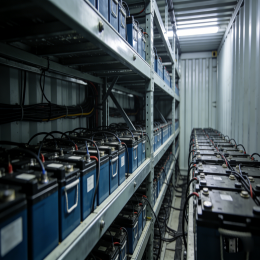
It is especially suitable for energy storage power stations and battery workshops, providing ultra-early warning of battery fires by detecting the characteristic gases released in the early stages of battery thermal runaway.
Tobacco
During the tobacco storage process, the system can monitor in situ for spontaneous combustion inside stacks caused by heat accumulation from fermentation, ensuring storage safety.

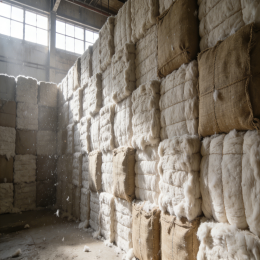
Cotton
In response to the tendency of cotton bales to absorb moisture and release heat during storage and transportation, the system can monitor their internal temperature, humidity, and gas changes in real time.
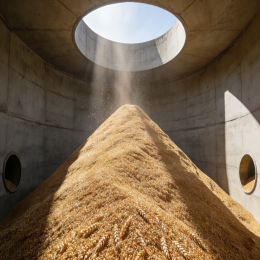
Grain accumulation
In large granaries, the system can monitor the heat storage process caused by respiration and microbial activity in grain in real time and in situ.
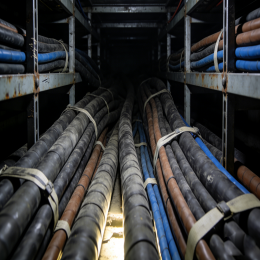
Bundled cables
capable of monitoring local overheating and thermal decomposition of insulation materials in cable trenches or trays caused by overload, insulation aging, or loose joints, providing early warning of electrical fires.
Waste containing oil and paint residues
In waste recycling stations or processing workshops, the system can sensitively detect the potential spontaneous combustion in piles of such hazardous waste caused by the accumulation of oxidized grease or solvent vapors.

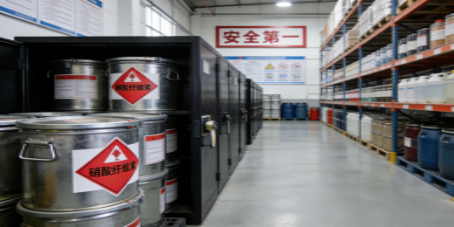
Flammable chemicals (such as nitrocellulose)
In chemical storage or usage areas, the system can monitor the decomposition signs and gas emissions of such unstable substances with high sensitivity.
Haystack
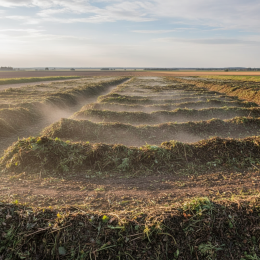
In the agricultural field, systems can be embedded inside haystacks to monitor abnormal internal temperature rises caused by fermentation or moisture.

Green waste piles and composting
Monitor spontaneous combustion caused by excessive heat buildup in real time, while optimizing the composting process.

 Company:
Lightwaves
Company:
Lightwaves
 Tel:
+31611264230
Tel:
+31611264230
 Address:
Bolderweg 1, 1332 AX Almere, The Netherlands
Address:
Bolderweg 1, 1332 AX Almere, The Netherlands
 Email:
info@lightwaves.nl
Email:
info@lightwaves.nl
Copyright © Lightwaves Website Map
