

Overview
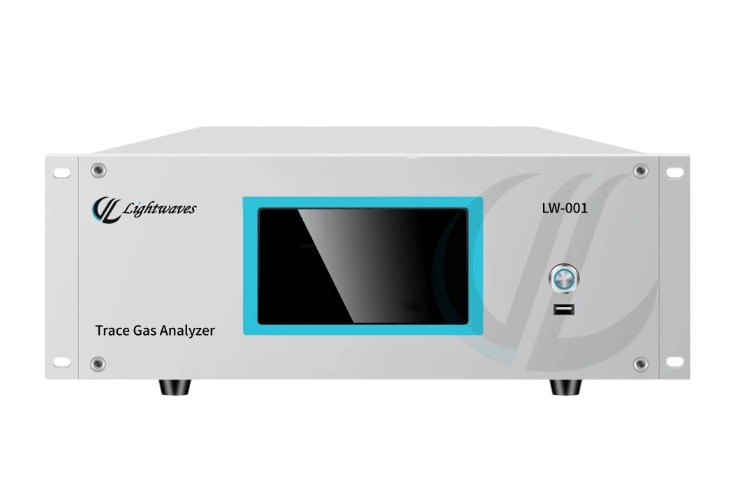
Based on infrared photoacoustic spectroscopy technology, LA-001 Photoacoustic Gas Analyzer combines the unique light source and detector which is a patented enhanced cantilever beam optical microphone with ultra-high sensitivity. It can be widely applied in scientific, industrial and other fields.
Principle
l Principle of operation: photoacoustic infrared spectroscopy
l Patented ultra-sensitive optical microphone based on MEMS cantilever sensor coupled with a laser interferometer to measure microscopic movement of the cantilever
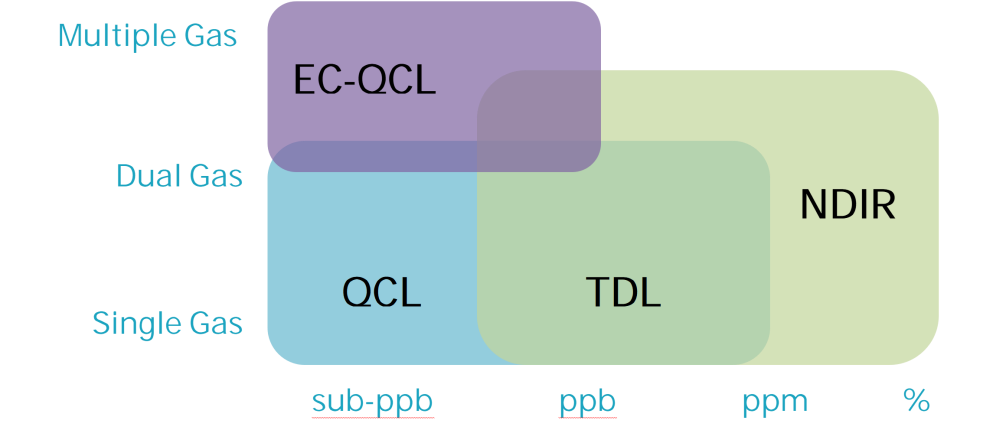
l Configure the light source according to the application composition requirements, such as sensitivity and gas
l Suitable light sources include tunable diode laser (TDLS), quantum cascade laser (QCL), external cavity quantum cascade laser (ECQCL), interband cascade laser (ICL), optical parametric oscillator (OPO), broadband IR source with bandpass filters (NDIR)
l Constant temperature of the chamber 50°C
Features
l Sub-ppm~sub-ppb limited detection
l Response time from 5 seconds to 3 minutes
l High dynamic range and stable operation
l No consumables
l Low sample gas volume (milliliters)
l Built-in gas exchange system
l Long calibration period
l User-configurable monitoring tasks
l Intuitive user interface
l Built-in Display Displays Numbers and Graphics
l Remote operation via tablet, smartphone or other LA-001
Technical Parameters
Specifications | ||
19”3U (unit)housing for both table top and rack mount operation | ||
Built-in Computer with 7"Front Monitor | ||
Dimensions | 48.4cmW×13.9cmH×44cmD(19.1inW×5.5inH×17.3inD) | |
Portable Dimensions | 51.85cmW×23cmH×40.5cmD | |
Weight | Approx 13 kg(15kg for portable model) | Data storage capacity sufficient for at least 1 year of continuous monitoring |
Sampling Volume | 10~30ml | |
Four gas connection ports in the rear panel,two sampling connections,equipped with dust particles filter | ||
Power supply | ||
Input voltage | 100-240VAC | 50-60 Hz |
Input power | 100-200W(depending on specific requirements) | |
Communication interface | Ethernet, USB | |
The LT 702 can be operated remotely via smartphone, tablet, or laptop | ||
Measurement characteristics | ||
Response time | Depending on channel integration time(C.l.T.)and gas exchange routine,typically from 5 seconds to 3minutes | |
Limited detection | Depending on gas and light source.Typically from sub-ppb to sub-ppm. | |
Dynamic range | Typically 5 orders of magnitude(i.e.100000 times the limited detection) | |
Repeatability | Less than 1%of measured value in operational conditions | |
Accuracy | Limited by the calibration gas accuracy at the calibration concentration. | |
Typically2~5% | ||
Temperature stability | No effect in the range | |
Pressure stability | No effect in the range | |
Operation conditions | ||
Humidity | Less than 90%RH,no condensation | |
Ingress protection | IP20(IEC 529) | |
Storage conditions | ||
Temperature | -20℃~+60°C | |
Sampling conditions | ||
Temperature | 0~+49°C | |
Humidity | No condensation | |
Flow rate | About lL/min | |
Pressure range | 930 mbar~1100 mbar,particles<1µm | |
Standard | ||
Complying with Low Voltage Directive 2014/35/EU,EMC Directive 2004/108/EC and EU ROHS2 Directive2011/65/EU | ||
Applications
Semiconductor and Electronics Manufacturing
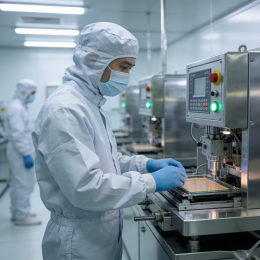
Monitor trace contaminant gases (such as NH3, HCl, HF, VOCs, etc.) in cleanrooms and during the process to ensure the purity of the process environment and product yield.
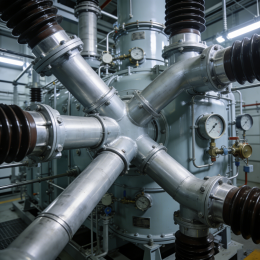
Power Transformer
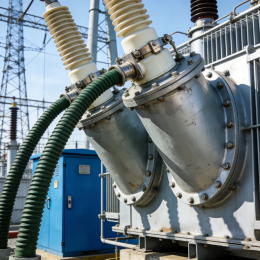
Real-time monitoring of characteristic gases inside oil-immersed power transformers (such as C2H2,H2, etc.) to achieve insulation aging and early fault warning.
GIS Fault Warning
Real-time monitoring of the purity of SF6 gas and its decomposition products (such as SO2, H2S, CO, HF, etc.) in gas-insulated switchgear(GIS) to provide early warnings of internal discharge or overheating faults in the equipment.
Catalyzation
Monitoring gases in catalytic reactions, such as CH2O,C6H5CH3,(CH3)2CO, CO2, CO, NOₓ, and NH3, to enable catalytic efficiency assessment.

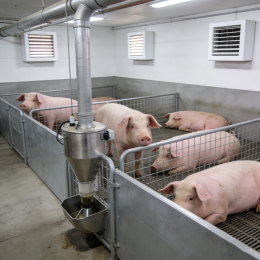
Husbandry
Monitoring the air quality of shelters and the livestock emissions such as methane, carbon dioxide, ammonia, etc.
Ambient air monitoring
Monitoring hydrogen fluoride (HF), ammonia and formaldehyde, etc. in ambient air.

Border security
Detecting trace-level illicit substances and signature volatile organic compounds (VOCs) such as MDMA, cocaine, amphetamines, drug precursors, as well as explosives such as nitrotoluene and nitroglycerin.

Cargo container safety
Detecting hazardous chemicals sealed in cargo containers include fumigants and VOCs.

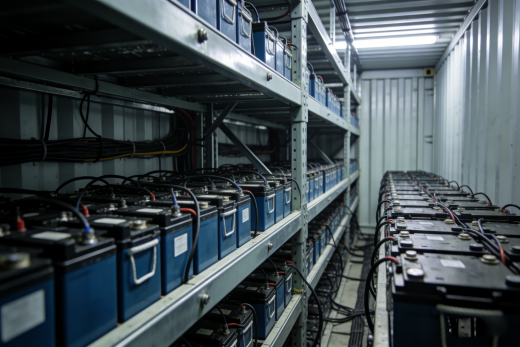
Thermal runaway
Real-time monitoring of lithium battery energy storage systems or characteristic gases in coal mines to achieve early warning of thermal runaway and system-linked protection
Soil analysis
Analyzing the climate impact of greenhouse gases emissions from soil in real time; Assessing the amount of fertilizer needed by measuring the ratio of N2O and NH3 in the soil.

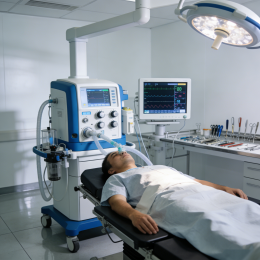
Anesthetic gases
Monitoring concentration levels of anesthetic gases such as sevoflurane, N2O, and other operating room decontamination solvents.
Shipment emission monitoring
Detecting and analyzing the concentration of SO2 and CO2 emitted from ships to determine the sulphur content of the fuel oil used.

Indoor air quality & Occupational health
Real-time monitoring of harmful Volatile Organic Compounds (VOCs) include formaldehyde, toluene, benzene, xylene, perchloroethylene, etc.

 Company:
Lightwaves
Company:
Lightwaves
 Tel:
+31611264230
Tel:
+31611264230
 Address:
Bolderweg 1, 1332 AX Almere, The Netherlands
Address:
Bolderweg 1, 1332 AX Almere, The Netherlands
 Email:
infor@lightwaves.nl
Email:
infor@lightwaves.nl
Copyright © Lightwaves Website Map
